
Find Tinley Park Residents
A useful Tinley Park residents directory search begins with the item already known. An exact address points first to a parcel map and assessor roll. A full name can be tested in court, business, license, unclaimed-property, and newspaper indexes. An older address belongs in the library's phone directories, newspaper microfilm, maps, and yearbooks. Each source records a role, not a complete household. An assessor names an owner or taxpayer. A deed names parties to a transfer. A phone book lists a subscriber. None should be silently relabeled as a current resident.
Tinley Park spans Cook and Will counties, so county identification comes before any deep search. Use the parcel identifier, township, or county GIS boundary when the postal label is not enough. Then preserve spelling, dates, and the role printed in the record. That method makes it far easier to distinguish two people who share a name.
- Confirm whether the address lies in Cook or Will County.
- Match the address to its parcel and copy the PIN exactly.
- Check the recorder, court, or other official index for the named role.
- For an older household, compare directory and newspaper years.
- Request the underlying record when an online summary is incomplete.
Tinley Park Records Custodians
The county line divides land, tax, court, election, and vital records. Cook recording work moved into the County Clerk in 2020, while Will County still has a Recorder of Deeds. The assessors turn an address into a PIN and property card. Election records follow separate state and county rules. For local permits, ordinances, licenses, and board material, the Village Clerk is the right starting point. The full address workflow appears in the Tinley Park street directory.
Will Supervisor of Assessments
302 N Chicago Street
Joliet, IL 60432
815-740-4648
Tinley Park Crosses Two Counties
The words “Tinley Park” do not identify one county custodian. Parcels in Cook County can fall in Bremen, Orland, or Rich Township. Other parcels lie in Will County. A mailing city can cross a government line, and it does not settle where a deed, assessment, court case, or vital event is filed. Start with the county parcel viewer or assessor result and note the township as well as the ZIP code.
This split is more than an office detail. Cook and Will use different parcel formats and different recording systems. A failed search in one portal may simply mean the address belongs in the other. Keep the raw PIN exactly as displayed, since punctuation and trailing digits can matter.
Search Cook Property Records
The Cook County Assessor Property Search accepts an address or PIN and offers an advanced owner-name route. Address mode is exacting. The portal instructs users to omit street suffixes from the street-name box. Direction and unit are separate controls, and a CAPTCHA may appear. A parcel card can show the property location, township, class, tax code, values, features, exemptions, and appeal history.
| Search control | Use | Format note |
|---|---|---|
| House Number | Required in address mode | Numeric street number |
| Direction | Optional | Choose the shown direction |
| Unit Number | Optional | Useful for condominiums |
| Street Name | Required | Leave off Ave, St, or Pl |
| City | Required | Use the assessor's city label |
| PIN | PIN mode | Fourteen digits |
The assessor warns that “Property Location” is not a legal or postal mailing address. That distinction matters. It is an insider clue that an owner card and a current household are not the same thing.
The Cook search screen shows the address fields before a query is run.
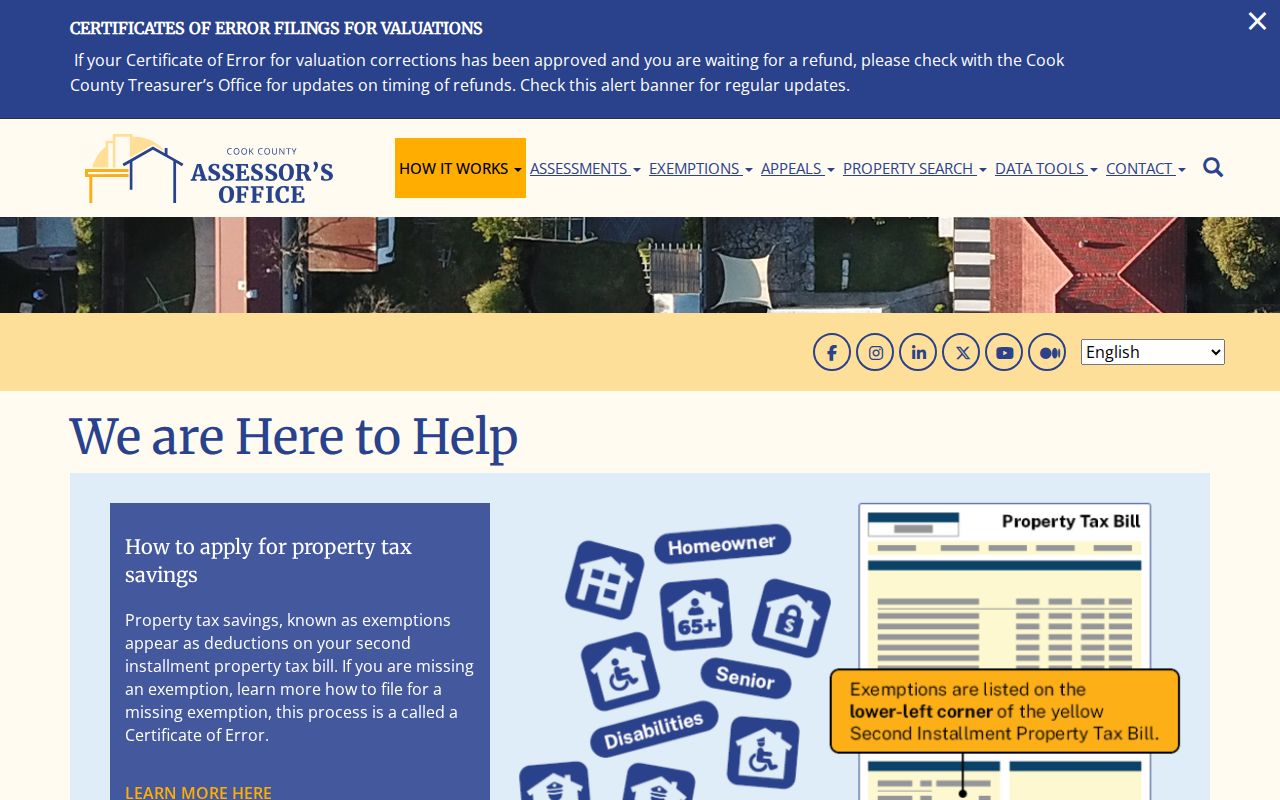
The separate unit, direction, city, and PIN controls explain why a loose text search may miss an otherwise valid Tinley Park parcel.
Read a Tinley Park Parcel
A property card is strongest when its labels are kept intact. The PIN identifies the parcel. The property location places it on the map. Classification and physical traits describe the real estate. Exemption and appeal fields document tax events. A mailing address may belong to a taxpayer who receives the bill elsewhere. None of these fields, alone, identifies everyone who lives at the property.
An inspected Cook parcel detail demonstrates the depth of the public card.
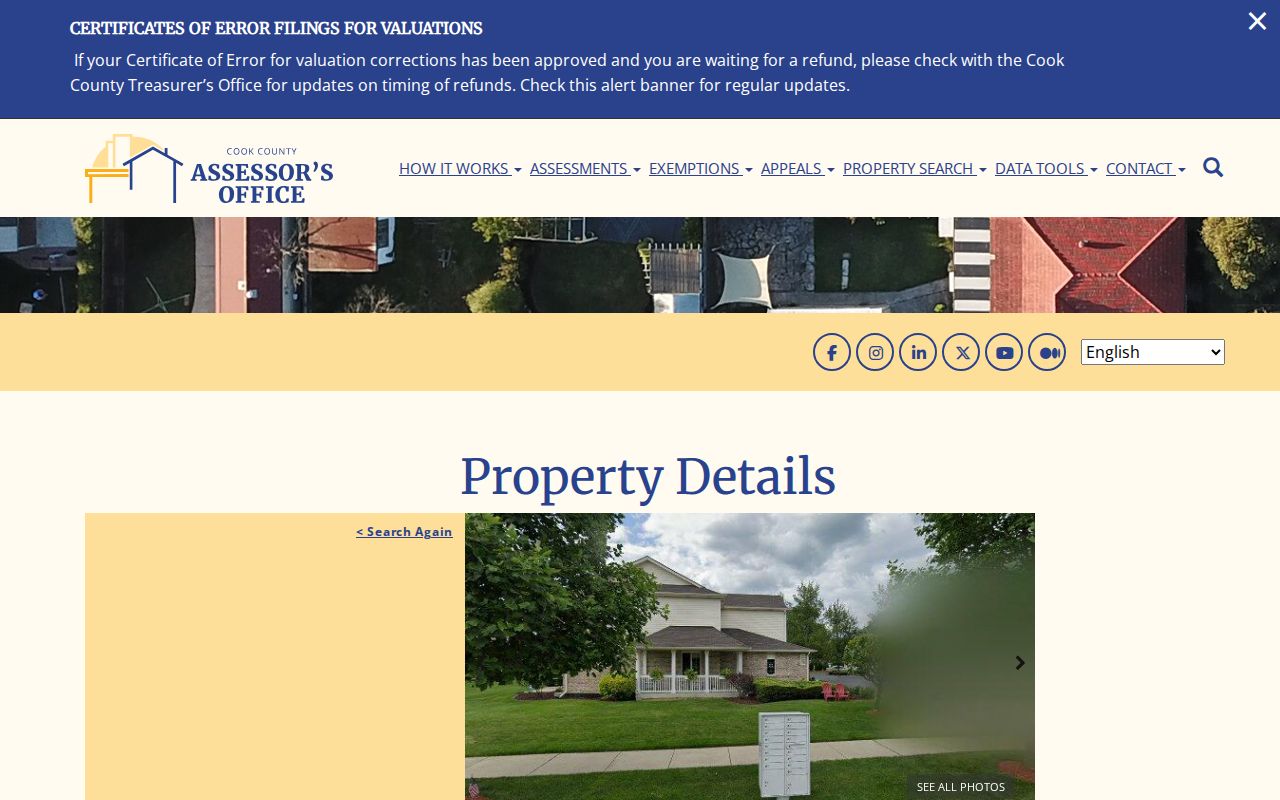
The result links assessment, exemption, appeal, tax, and map evidence, making it a good hub for confirmation rather than proof of occupancy.
- Parcel or PIN
- The county's identifier for one tax parcel.
- Index
- A finding aid that points to a record or document.
- Roll
- A list kept for a defined public purpose, such as assessment.
- Criss-cross directory
- A directory arranged by street and address instead of only by surname.
Current Tinley Park Resident Rolls
No modern roll lists every Tinley Park resident. Official sources instead record a narrow public role. Property systems name owners or taxpayers. Recorded documents name grantors, grantees, and other parties. Court indexes identify parties to public cases. The Village portal can connect names or addresses to permits and licenses. The state voter tool verifies registration under election-law limits, not a whole household.
| Source | Who It Lists | Keeper | Access |
|---|---|---|---|
| Property roll | Owners or taxpayers | Cook or Will assessor | Free portal |
| Voter lookup | Registration status | Illinois election authorities | Regulated official lookup |
| Recorded-document index | Parties to recorded instruments | Cook Clerk or Will Recorder | Index free or mixed |
| Municipal records | Applicants and public record roles | Village of Tinley Park | Portal or FOIA |
| Library collections | Subscribers, students, named subjects | Tinley Park Public Library | Digital or onsite |
Choose the roll that fits the question. Use land records for ownership, a court index for a case role, and historical collections for an older name or address. A Tinley Park resident lookup should confirm one person across sources.
Will County Address and PIN
The Will Supervisor of Assessments address search separates street number, street name, and city. The county notes that its address data are maintained through 9-1-1 addressing. A second PIN search accepts full or partial parcel numbers and explains the number segments. These tools help route Tinley Park records to the Will side before a recorder or tax search.
The address form makes that routing visible.
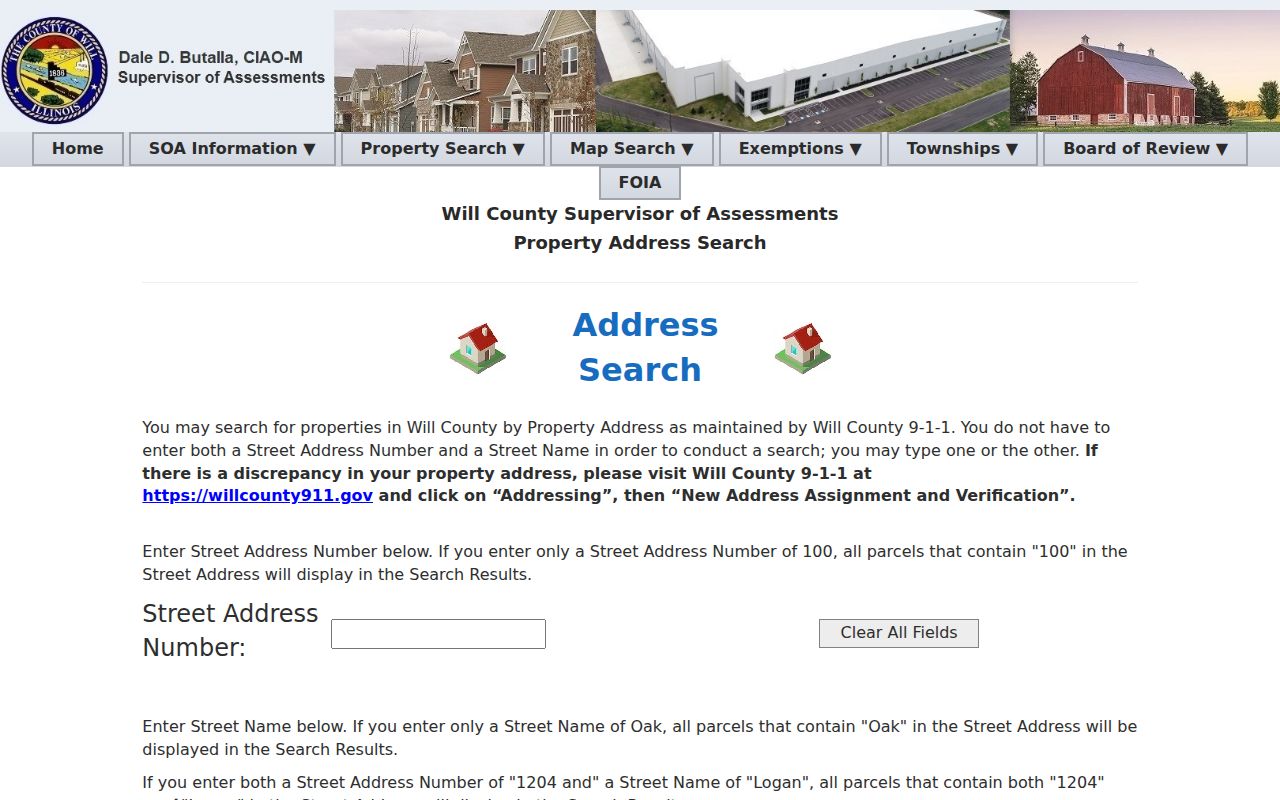
Once the matching parcel appears, copy its county label and PIN rather than relying only on the postal city.
The Will PIN screen also shows how a parcel number is divided.
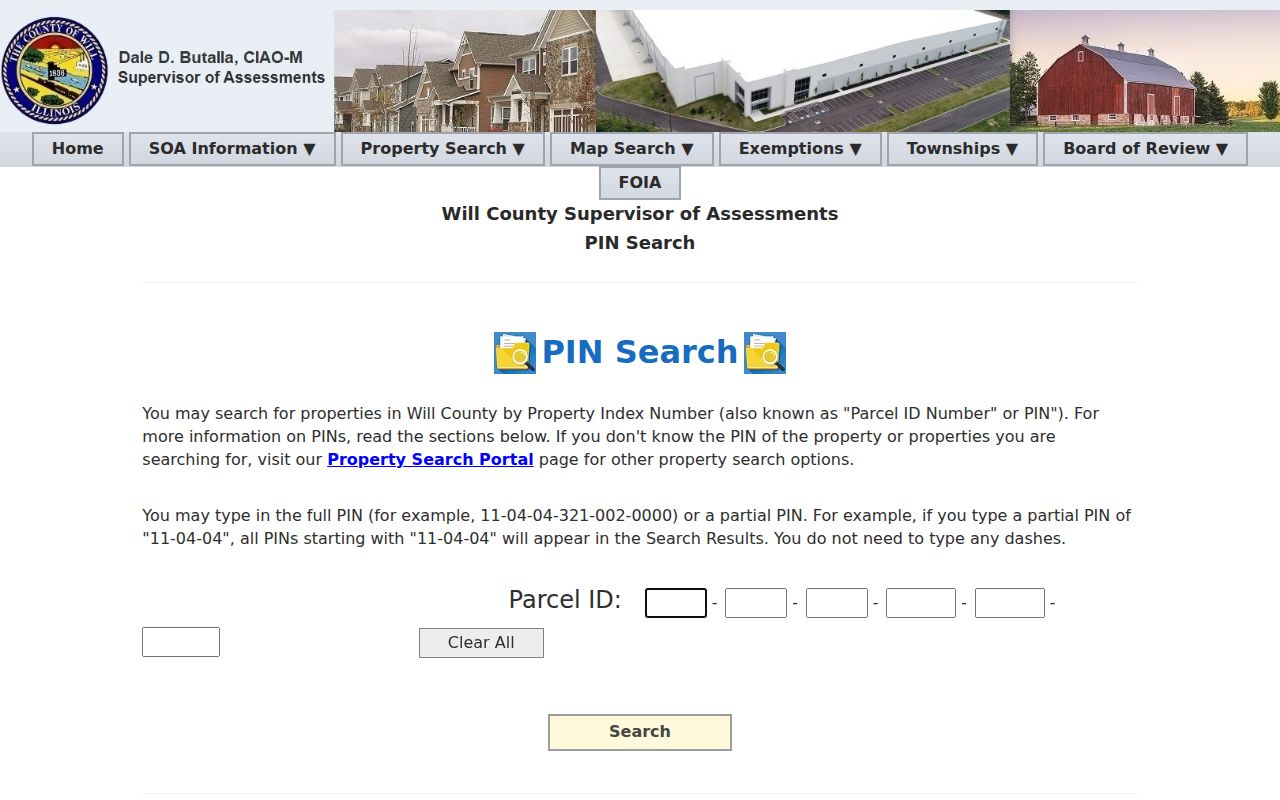
A partial PIN can broaden a search, but the final match still needs the exact address and parcel detail.
Tinley Park Tax Portal Clues
The Cook County Property Tax Portal accepts either a PIN or an address. Its address mode uses house number, street, optional unit and ZIP, and city. Results join the property location to assessment, exemption, appeal, Clerk-document, billed-history, and Treasurer information. A tax record can confirm a parcel and a billing trail. It cannot prove who occupies a home.
The portal's opening form shows the optional ZIP filter.
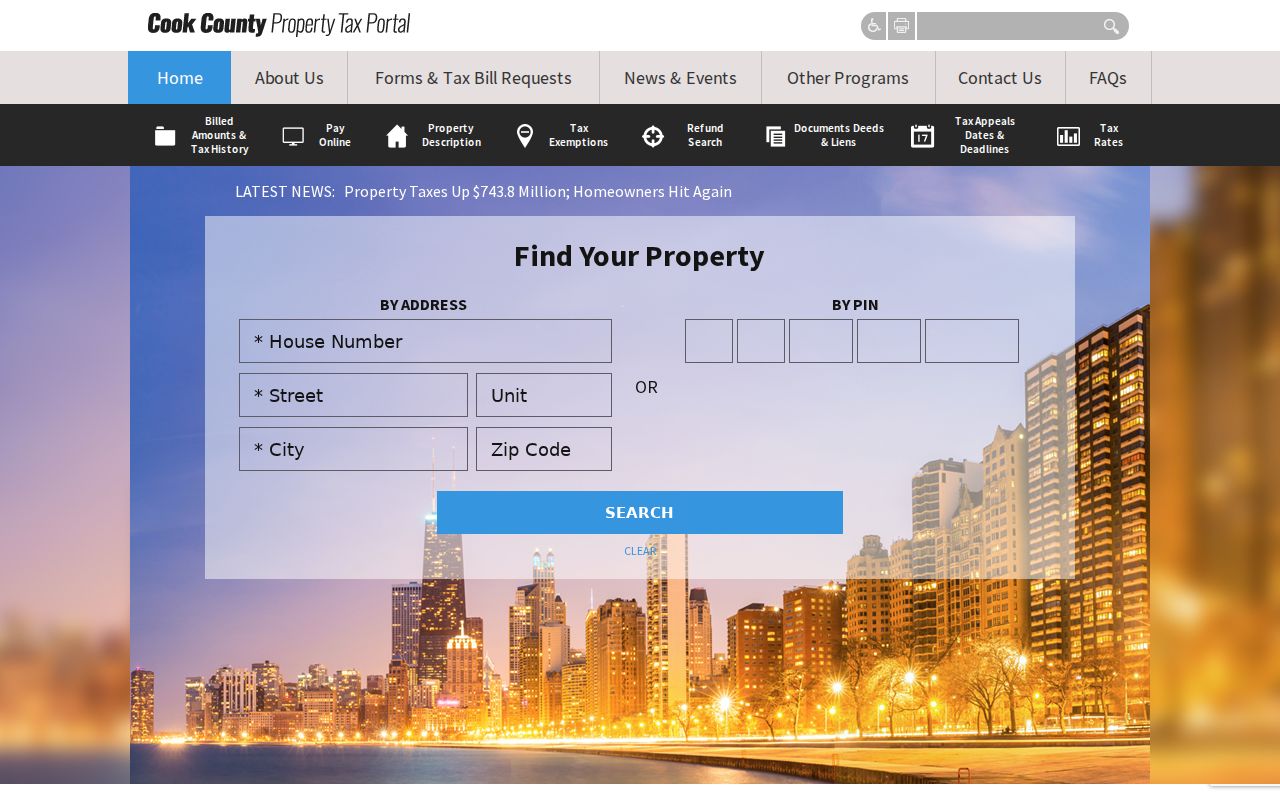
That ZIP box narrows an address query, while the PIN remains the safer bridge between county systems.
Recorded Names in Tinley Park
Recorded land documents create a dated name trail. A grantee receives an interest; a grantor transfers one. Mortgages, releases, liens, and plats may add other parties and legal descriptions. Cook County routes recording work through the Clerk. Will County's free Direct Search normally exposes web documents from 1965 forward and lets users search by name, date, document type, address, ZIP, parcel, or book and page. Older Will material remains available through archive workstations, microfilm, indexes, and maps.
The Cook Clerk recording page is the official entry point after the Recorder function moved in 2020.
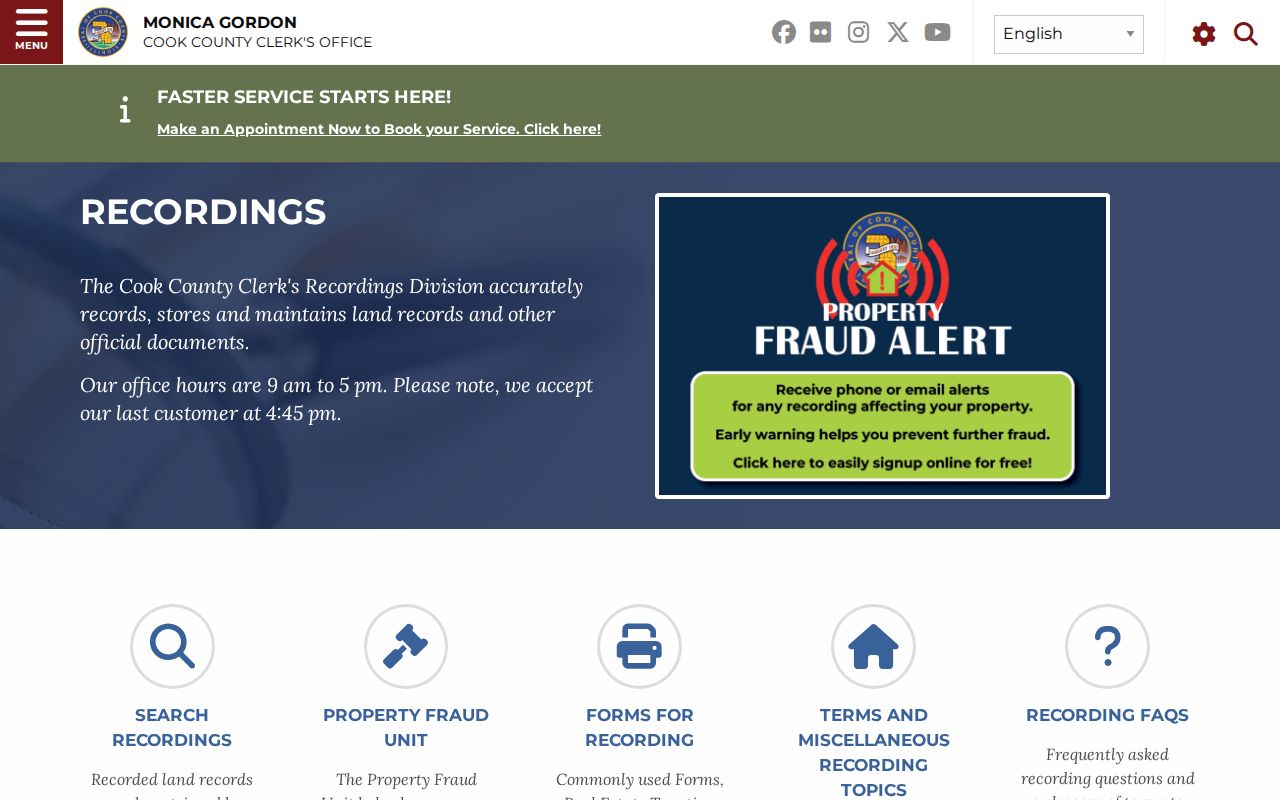
Use its search or purchase route, but request office help when the current online index does not expose the needed field or year.
Tinley Park Village Records
The Village Clerk routes local records that county portals do not hold. Tinley Park's BS&A portal offers address, name, or parcel entry points plus building and business-license searches. Permit files can contain the project address, PIN, description, owner or applicant, contractor, and dates. Those roles describe a project file, not a household roster.
For material outside the portal, the Village FOIA form accepts a record description and a choice to inspect or receive copies. It lists department checkboxes and uses the ordinary five-business-day framework under the Illinois Freedom of Information Act, 5 ILCS 140/1 et seq. Requests can be sent to FOIA@tinleypark.org. State law does not require a person to use the agency's form, and a general purpose usually need not be stated.
Illinois Voter Record Limits
The Illinois voter registration lookup is an official status tool, but it is not a public household directory. The statewide voter-file rules in 10 ILCS 5/1A-25 regulate what is released and how it may be used. Public-file extracts omit protected fields, including street number for many public-list uses, and carry limits on personal, private, or commercial exploitation.
Use election material to confirm the exact status the official result states. Do not infer everyone at an address, party preference, or an unlisted person's registration. If a historical poll book is the goal, the Illinois State Archives and its regional depositories are more suitable than a current lookup.
Official Rolls Versus Search Sites
Commercial people-finder services combine data from many places, but their matches may be stale, merged, or stripped of the source labels needed for verification. Official custodians are narrower. They state why a name appears, whether the result is only an index, and where to request the underlying file. That context is worth more than a long list of loosely linked names.
| Source type | Strength | Main limit |
|---|---|---|
| Official portal | Named custodian and defined record role | May show only an index or current data |
| Library collection | Dated pages and local context | Coverage has gaps and access rules |
| Commercial compilation | Broad starting lead | Source, date, and identity may be unclear |
A responsible Tinley Park residents directory search returns to the official image, card, or custodian before drawing a conclusion.
Historical Tinley Park Resident Directories
The Tinley Park Public Library Special Collections ties together more than 200 local-history documents, maps, and brochures, a print index at the Adult Reference Desk, newspaper microfilm beginning in 1929 with gaps, and local yearbooks. The digitized local-history site includes directories and community guides, phone books, maps, census and survey material, church records, and village collections.
Visible Illinois Bell items span selected months from 1926 through 1946, with gaps. A directory entry can place a subscriber or business at a dated address, but it omits households without a listed telephone. Tinley Park High School yearbooks run from 1963 forward, and Victor J. Andrew High School yearbooks begin in 1978. These sources can link name variants, classmates, and neighborhoods when compared with newspaper and parcel evidence. The full collection method appears on the Tinley Park city directory page.
Tinley Park Names Changed
Historical searches must follow the words used at the time. Early records may refer to Bremen or New Bremen before the Tinley Park postal name took hold. The village incorporated in 1892 after a 34 to 24 vote, and the railroad shaped the early street grid. Older material may also use Thornton Road where a modern search expects 175th Street. Search both forms, then confirm any claimed equivalence with a plat, map, deed, or municipal source.
The Historical Society's 1884 chapel and schoolhouse museums preserve family histories and local reference material, though the public site does not publish a box-level catalog. The Illinois State Archives and IRAD add county land, tax, probate, court, school, poll-book, and local-government holdings. Together, those places extend the Tinley Park residents directory far beyond what a modern portal can show.
Note: A missing directory year or failed modern spelling is a search gap, not proof that a person or address was absent.