
Tinley Park Directory Collections
The Tinley Park Public Library Special Collections page is the practical catalog for local resident history. Its holdings span digitized item sets, physical reference works, microfilm, and controlled-access databases. No official catalog found in the research states a complete publisher-by-year run for a standalone Tinley Park city directory. The verified shelf is broader and more useful than one presumed series.
| Collection | Years | Where Held | Access |
|---|---|---|---|
| Illinois Bell telephone books | 1926-1946, with gaps | Library digital local history | Free item pages online |
| Local newspapers | 1929-2000s, with gaps | Library microfilm and onsite database | Ask Adult Reference Desk |
| Directories and community guides | Runs not fully enumerated | Digital item-set index and print index | Browse online; request item lookup |
| School yearbooks | 1963-present; 1978-present | Library and SWAN catalog | Collection access varies |
The phone books are subscriber lists, not a census. The newspaper sequence also changes titles and contains gaps. Researchers should ask whether a cited item is a scan, microfilm reel, print volume, or metadata record before expecting a page image. That distinction prevents a catalog hit from being mistaken for proof of residence.
Tinley Park Bell Directory Years
The digitized Illinois Bell collection exposes volumes labeled July 1926, July 1927, July 1929 through July 1931, July 1933 through July 1936, February 1937, February 1940, January 1941, and December 1944 through December 1946. Two visible records carry a February 1937 label, so item IDs matter when requesting a scan.
These telephone books may show a subscriber or business name, phone number, exchange context, and an address. They omit unlisted households and people without service. A business line may point to an office rather than a home. Preserve the printed name and date exactly, then compare it with a second source.
The library's visible collection page shows how the volumes are organized. The Illinois Bell item list can be reviewed here before opening an individual year.
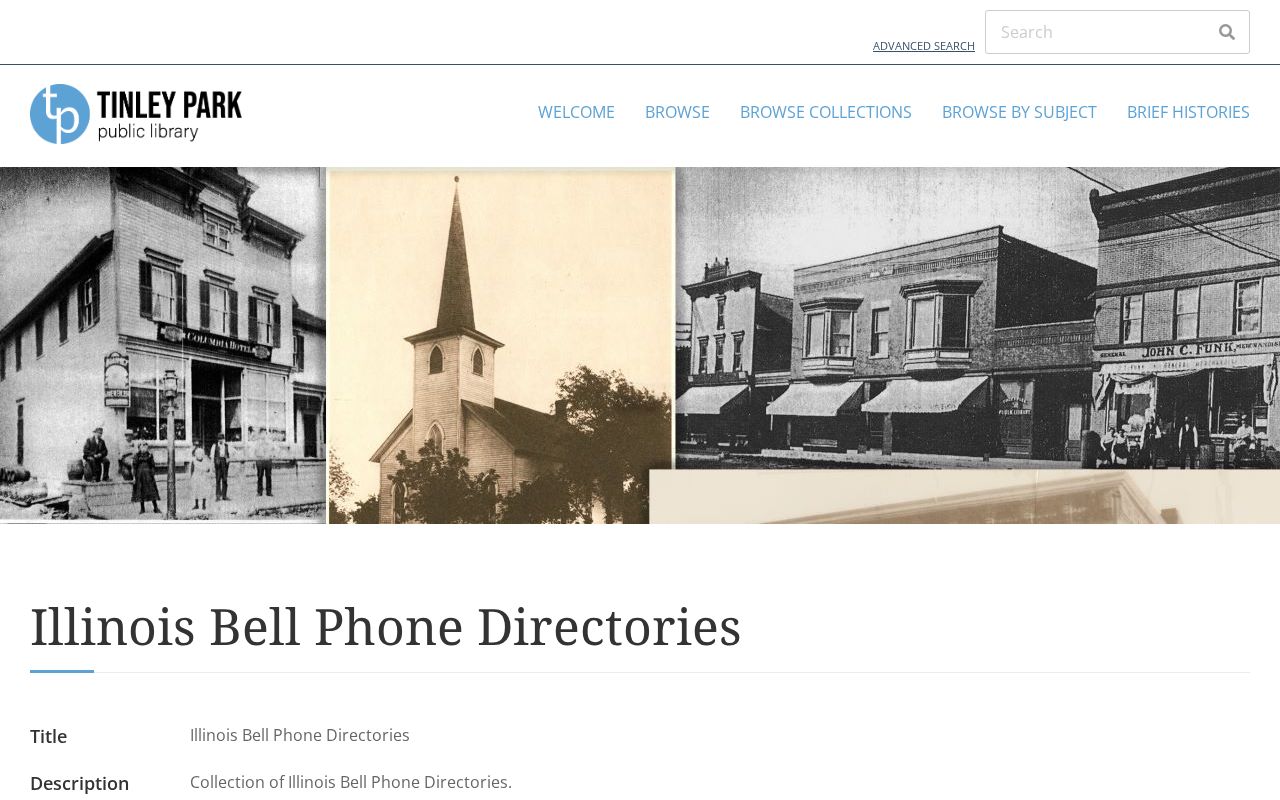
The year labels make it possible to prepare a precise request rather than asking staff to search an undefined span.
Tinley Park's Digital History Shelf
The library's local-history item-set index reaches beyond city directories. It names collections for maps, census and survey records, church histories, village documents, post-office history, fire records, telephone books, and directories and community guides. Those categories help connect an old name to the institution, street, or event that generated a record.
The collection index provides the clearest overview of that digital shelf. Browse the Tinley Park item-set landing page to identify the collection title first.
After locating a collection, record its title, year, and item ID. A focused scan request is more likely to reach the right page than a broad surname query.
Tinley Park Newspaper Directory Trail
Newspapers fill many gaps between annual or periodic listings. Library microfilm begins with the Tinley Park Times in 1929, though gaps exist. Catalog evidence identifies a title sequence: Tinley Park Times from 1929 to 1971, Times Herald from 1971 to 1975, Star/Herald from 1976 to 1983, and the Tinley Park edition of the Star from 1983 into the 2000s.
A directory address can lead to a birth notice, club item, business advertisement, obituary, or property event. Search the date range around the directory issue, since data may have been gathered months before publication. Confirm exact newspaper availability with the library before traveling.
Note: A newspaper mention shows the role stated in that article, not continuous residence at the printed address.
Reading Tinley Park Directory Entries
A reliable inventory starts with only the fields visible on the image. The digitized metadata alone does not expose a safe page-level Bell entry. Public environmental reports do abstract some later directory rows by year, street address, occupant name, and availability or redaction note. Those abstracts are leads to the underlying images, not a substitute for them.
| Name | Subscriber, household notation, or listed business, copied exactly as printed |
|---|---|
| Address | Street and number if the volume supplies them; retain historic road wording |
| Telephone | Number and exchange context, which may change across editions |
| Entry type | Person, business, no-phone notation, or redacted row |
| Key marks | Symbols and abbreviations interpreted only through that volume's key |
- Criss-cross directory
- A directory arranged by street address or telephone number rather than surname.
- Householder index
- A list centered on the named household representative, which may omit other occupants.
- Abbreviation key
- The publisher's legend for shortened terms and symbols. Save it with every page used.
A 2019 public environmental report gives examples at 183rd Street: Violet Fisher in a 1969 row, Diana Adrianowicz in 2004, Fowler Mushrooms in 2009, and Stanislaw Roguski in 2015. Such rows can identify a person or business tied to a dated address, but they do not establish who else lived there.
Tinley Park Library Research Desk
The library keeps more than 200 local-history documents, maps, and brochures in its office, with a print index at the Adult Reference Desk. A first-floor microfilm and microfiche reader supports newspaper work. Genealogy reference material includes the Tinley Moraine Genealogists' collection, while circulating genealogy books sit under nonfiction call number 929.
Genealogy assistance can include a one-hour appointment for eligible library users. Ancestry Library Edition is for in-library use, and HeritageHub provides obituary and death-notice leads under the library's access rules. Bring exact names, date ranges, title names, and item IDs. Staff can help locate a source, but a request should not seek a private membership list.
The library's Special Collections screen previews the range of those services. Review its access notes and holdings before a visit.
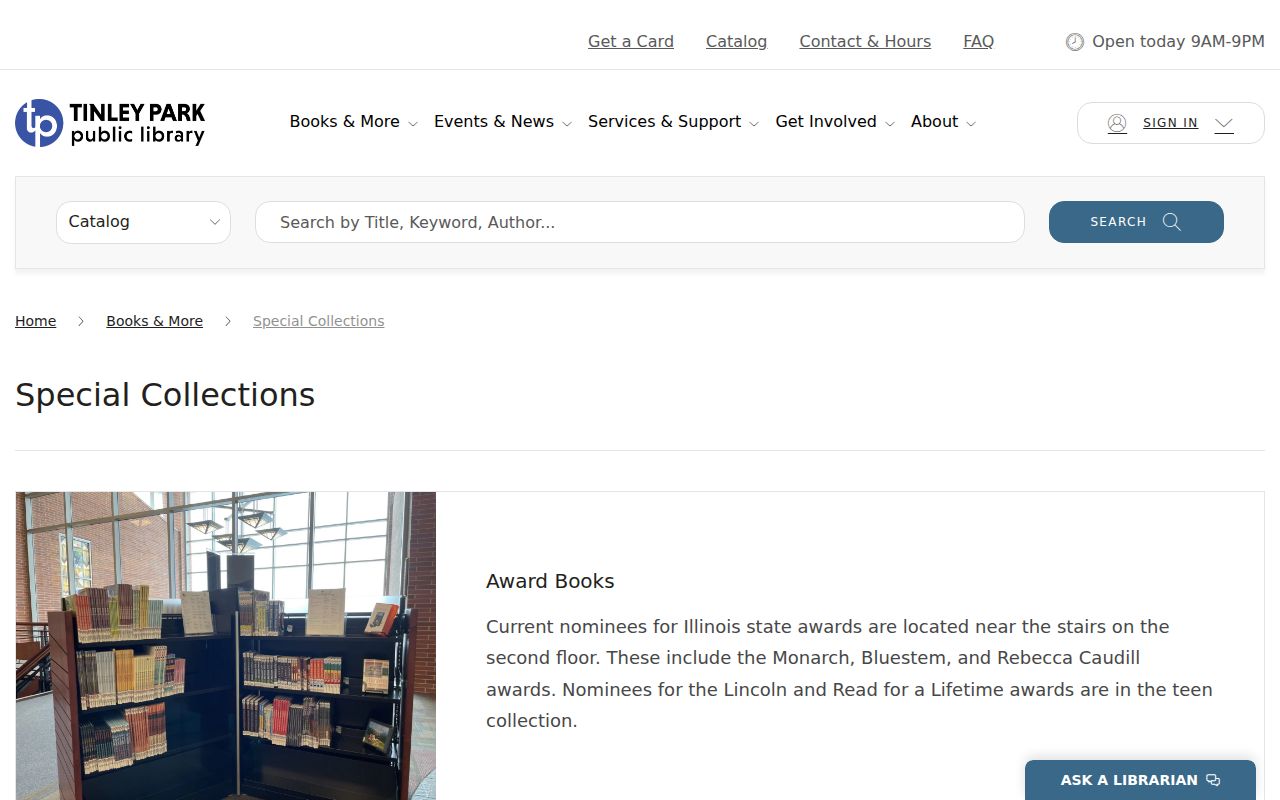
The collection mix is especially valuable when one city directory year is missing, because a yearbook, newspaper page, census record, or obituary may provide the next dated link.
Tinley Park Yearbook Cross-Checks
School records can test name variants and community ties without pretending to show a current address. The library reports Tinley Park High School yearbooks from 1963 to the present and Victor J. Andrew High School yearbooks from 1978 to the present. Broader Chicago-area school and college runs, some dating to the 1920s, appear in the genealogy collection and SWAN catalog.
Capture the school, volume year, page, class, club, and printed name. Then compare the entry with a dated newspaper notice or later public record. A photograph or club listing confirms participation in that source year, not residence throughout the whole school year.
Tinley Park's Two-Era Labels
The Tinley Park Historical Society maintains an 1884 chapel museum and an adjacent schoolhouse museum. Its reference material covers family histories, Batchelor's Grove, the railroad, Bremen and New Bremen, early businesses, German settlement, and local industries. No public box-level catalog or complete directory run is posted, so a focused visit or contact is required.
A local-history record for Zion cemetery supplies a useful quirk: its metadata distinguishes Bremen Township from 1830 to 1890 and Tinley Park from 1890 onward. Search both era labels when working near that transition. The village incorporated in 1892 after a 34-24 vote, so postal, township, cemetery, and municipal terms do not all change on one date.
Tinley Park Directory Timeline
The surviving sources form overlapping windows rather than one unbroken publication run. A short timeline helps keep each source in its proper era and prevents a later label from being imposed on an older record.
| 1830-1890 | Zion cemetery metadata uses Bremen Township as its local era label. |
|---|---|
| 1890-current | The same cemetery collection uses Tinley Park as the later local subject. |
| 1926-1946 | Verified Illinois Bell volumes appear in selected months and years, with gaps. |
| 1929-2000s | Local newspaper holdings continue through several title changes, also with gaps. |
| 1963-current | Tinley Park High School yearbooks supply a school-community cross-check. |
| 1978-current | Victor J. Andrew High School yearbooks add a second local school run. |
Later public environmental reports cite directory-image years from 1970 through 2013 and address rows extending from 1969 to 2015. Those reports document that images were reviewed for a specific environmental project. They do not prove that the library owns the source volumes or that every Tinley Park address appears. Ask for the underlying title, page, and directory year whenever possible.
Tracing Tinley Park Family History
A directory trail works best when the modern property identity and historic source identity stay separate. Begin with an exact address and county parcel number. Save the situs address, legal description, township, and mailing label in separate fields. Then use directory issues nearest the event years and compare them with census or newspaper dates.
- Start with the current assessor or GIS card and note the owner or taxpayer role without calling that person an occupant.
- Use the recorded deed to identify a prior grantor, then search both surname and address in the nearest directory years.
- Retain initials, maiden names, alternate spellings, widow wording, and business entries as printed.
- Pair directory snapshots with census years, newspaper notices, yearbooks, and probate or cemetery leads.
- Confirm a person through at least two identifiers, such as address and relative, or address and dated deed.
Disappearance from a city directory can mean a move, death, unlisted phone, publication gap, changed spelling, or simply no subscription. For a modern address-keyed record chain, use the Tinley Park street directory. When the goal is to verify one modern person, continue with the resident lookup.
For a deceased resident, carry the trail into the newspaper, death-record, probate, cemetery, and deed systems. Illinois archives and IRAD can hold governmental land, tax, poll, naturalization, court, school, or municipal records that never became part of a city directory collection. Cook material routes through the Northeastern Illinois University region and Will material through Northern Illinois University. Call ahead because hours and copy access vary.